Every billboard creates awareness. Very few create measurable customer journeys. Real estate marketers are often asked: "We know thousands of people saw our billboard. But how many actually became interested buyers?"
The truth is, most outdoor advertising is incredibly effective at creating awareness and staying on top of mind, but is surprisingly ineffective at capturing intent.
Billboards, metro branding, transit advertising, project hoardings, brochures, newspaper ads, and sales collateral all succeed in one thing: grabbing customer eyeballs.
Where they fall short is in starting the conversation. That's because most physical marketing assets are still static.
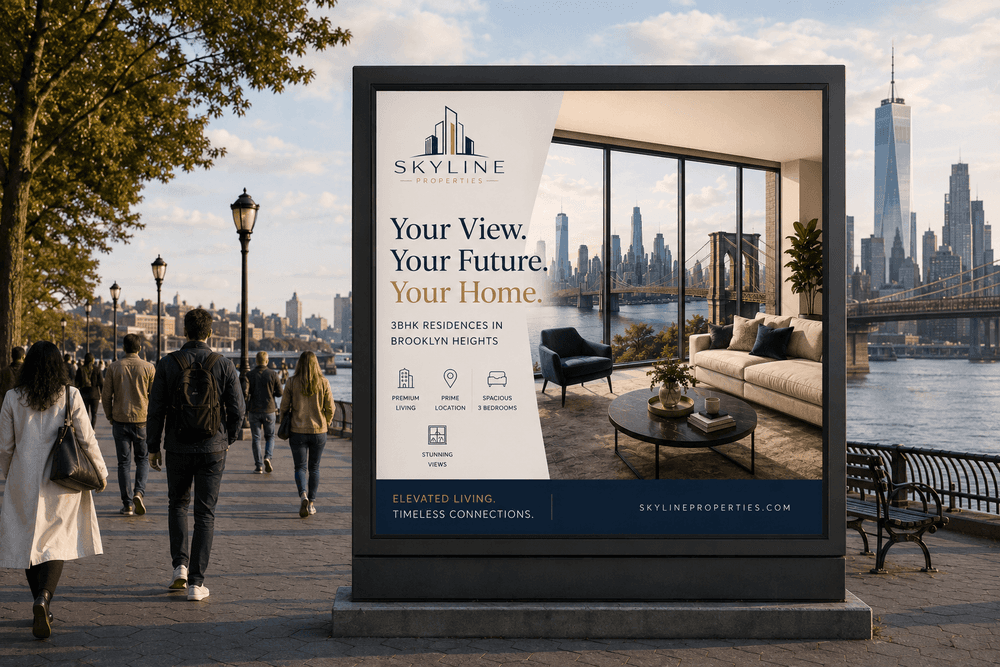
The future of real estate marketing isn't just about better creatives or even celebrity endorsements or bigger media budgets.
It's about creating Connected Experiences for prospective buyers across physical touchpoints that seamlessly transition into meaningful digital interactions.
What are Connected Experiences?
Connected Experiences are physical customer touchpoints enhanced with digital interactions that reduce friction, capture intent, and generate measurable engagement.
And one of the technologies making this possible is Marqr’s Dynamic QR Codes.
💡 Did you know: 59% of Consumers Scan QR Codes Daily
The Biggest Leak in Your Real Estate Marketing Funnel
Imagine a young couple driving home from work. They pass a billboard advertising a new residential project. The location is attractive, the amenities catch their attention, and the pricing looks promising.
For a few seconds, they're genuinely interested.
Then the traffic signal turns green and they drive away. They've disengaged from your campaign and can't type a website URL or call a sales representative. They tell themselves they’ll call when they get home, but by the time they get home, they've forgotten about the project.
A week later, they see the same billboard.
"We should really look that up sometime."
And the cycle repeats.
Your campaign successfully generated intent—but failed to capture it. That’s because the first few ads that they see creates the intent, but over time, the motivation is depleting, and the competitor’s campaign that is seamlessly interactive is the one that will convert.
This is one of the largest yet least discussed leaks in the real estate marketing funnel. Awareness Isn't the Problem. Friction Is.
Most marketing teams optimize for:
- Attractive creative
- Best locations
- Catchy messaging
- Better audience targeting
But very few optimize what happens after someone notices the advertisement. Every additional step reduces the likelihood that a prospect will engage.
When prospective buyers are required to type a URL, dial phone number, or google search for your project later, these introduce friction and reduce their incentives to act.
The campaigns that perform best aren't necessarily the ones with the best creative. They're the ones that make taking the next step effortless.
💡 Learn How You Can Generate Leads From your OOH Ad Campaigns
Why Static Marketing Assets Are Holding Campaigns Back
Traditionally, real estate advertisements rely on one of three calls-to-action like visiting your website, calling your sales office, or scanning a QR code.
The first two require deliberate effort, whereas the third removes friction—but only if it's intelligent.
Most QR codes used today are static. That is, once they're printed, they're permanent.
It doesn't account for change. If your:
- landing page changes,
- pricing changes,
- brochure is updated, or
- sales contact changes
Your print campaigns become instantly outdated, and trial and error can become a trial by fire.
The opportunities to improve ROI on your outdoor campaigns are rare and expensive. Digital campaigns, on the other hand, improve every week. In other words, with static campaigns your marketing stops evolving the day it's going live.
This is where Marqr’s Connected Experiences change the equation.
💡 Learn How to Edit Content on Dynamic QR Codes Without Reprinting
From Static Advertising to Connected Experiences
Instead of treating a billboard as a dead-end on your customer's journey, Connected Experiences transform it into the beginning of one.
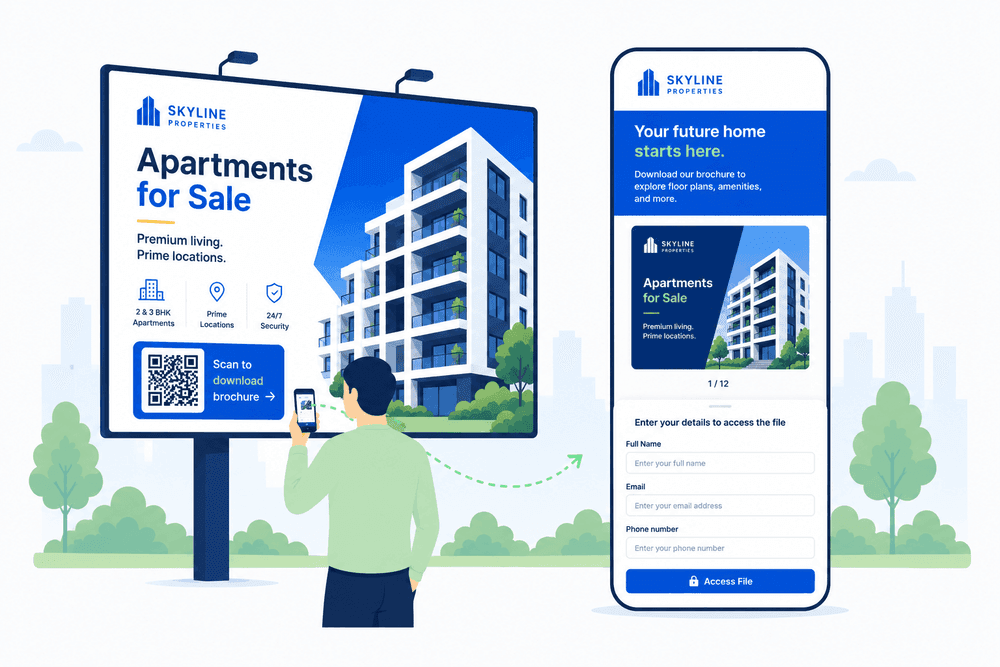
A single interaction can take a prospective buyer from a physical advertisement directly to:
- A project microsite,
- An immersive gallery,
- A virtual walkthrough,
- A downloadable brochure ,
- Google Maps directions to the project site,
- A site-visit scheduler,
- A sales consultant's digital business card, or
- A lead capture form
Your physical advertisement no longer simply creates awareness, it creates engagement, drives action, and generates leads.
And because these experiences are powered by Dynamic QR Codes, they remain flexible long after your marketing collateral has been printed.
Need to replace a brochure?
✔ Update the destination instantly.
Launching a new landing page?
✔ Redirect visitors without reprinting a single billboard.
Want to test different conversion journeys?
✔ Run experiments while your campaign is still live.
Instead of treating outdoor advertising as a fixed asset, Connected Experiences allow campaigns to evolve continuously.
Engagement Analytics: The Missing Layer in Offline Marketing
Perhaps the greatest opportunity isn't in making advertisements interactive but in making them measurable.
Digital marketers know which ads generated clicks, which campaigns produced leads, or which landing pages converted better. However, outdoor marketers have traditionally lacked this visibility.
Connected Experiences bridge that gap.
By using Dynamic QR Codes behind every interaction, marketing teams can understand:
- Which billboard generated the most engagement
- Which projects attracted the highest interest
- Peak engagement times
- Geographic distribution of visitors
- Device and browser insights
- Lead generation performance
- Campaign-level ROI
Traditional outdoor advertising measures exposure. Connected Experiences measure engagement—helping marketers understand how, when, and where prospective buyers interact with their campaigns.
Learn How You Can Measure Engagement With Marqr Analytics
Why Connected Experiences Matter for Real Estate
Buying a home is one of the most important purchasing decisions people make and prospective buyers don't just make a decision from a billboard.
Billboards help them begin their research.
That's why the objective of outdoor advertising shouldn't simply be awareness. It should reduce friction between curiosity and action.
And Connected Experiences make that possible. Because they allow every brochure, billboard, sales office, newspaper advertisement, standee, and project hoarding to become an interactive digital touchpoint that helps buyers continue their journey at the exact moment interest is highest.
💡 Learn How You Can Share Your Brouchures as a PDF QR Code or a Short Link
Power Connected Experiences with Marqr
Marqr helps real estate developers transform static marketing assets into measurable connected experiences. Unlike traditional print campaigns, Marqr allows your marketing assets to evolve long after they've been published.
With Dynamic QR Codes, marketing teams can:
- Turn billboards into interactive customer journeys
- Share project brochures, virtual tours, and landing pages
- Update destinations anytime without reprinting
- Capture enquiries through integrated lead forms
- Route visitors to Google Maps or sales representatives
- Measure engagement across every campaign
- Understand the ROI of offline marketing
Dynamic QR Codes are simply the technology that powers Connected Experiences. The real transformation is creating Connected Experiences that reduce friction, capture buyer intent, and make every physical marketing asset measurable.
Because the future of real estate marketing isn't just about getting noticed. It's about making every customer touchpoint connected.