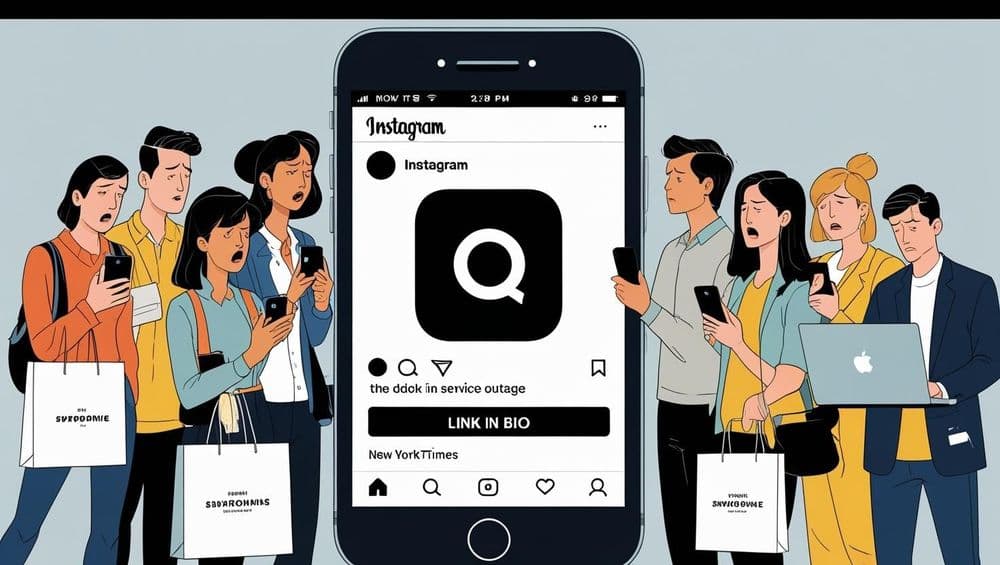
For a Direct-to-Consumer brand, discovery is oxygen. Every click, every scan, every digital handshake matters. It’s how a customer moves from noticing your product on Instagram to adding it to their cart, from seeing your packaging on a store shelf to becoming a repeat buyer.
That’s why the sudden disappearance of Linktree in India this month was more than a technical glitch — it is a wake-up call.
The 2022 unicorn, Linktree, surpassed 50 million users in 2024. India has been the platform’s fifth-largest market by traffic, accounting for 3.5% of its global visits, according to data shared with TechCrunch.
We spoke to several D2C customers during the outage, and many of them had no idea that their link in bio had stopped working.
For some, that meant customers couldn’t access their store; for others, entire campaigns suffered in silence.
The culprit wasn’t the concept of link-in-bio itself, rather it was the lack of visibility, control, and reliability that comes from treating it as “just another link.”
The implications are significant. In the D2C space — where margins are tight and acquisition costs are high — even a few hours of invisible downtime can derail entire campaigns. Worse, customers rarely report a broken link; they simply drop off and move on.
The Rise (and Risk) of the “Link in Bio”
For a long time, Instagram had limited users to a single clickable link in their bios. For creators and brands alike, this was a choke point. How could a D2C coffee roaster in Delhi link to its subscription page, seasonal blends, and sustainability story all at once?
Enter Linktree. Founded in 2016, the Australian startup provided a simple solution: one link that contained all your other links. For small brands, it felt like a lifeline. Instead of constantly swapping URLs, they could give customers one gateway to everything.
By 2024, Linktree had amassed 50 million users, including thousands of Indian D2C businesses. From skincare startups to artisanal bakeries, it became the de facto way to turn social followers into website visitors.
But the outage in India exposed a flaw: if your entire funnel depends on a single platform, one failure can cut off every path to your brand.
Why Over-Reliance Is Dangerous for D2C
For D2C brands, agility is everything. Unlike big retailers with offline distribution, most D2C businesses rely on digital-first customer acquisition and engagement. Losing a key channel doesn’t just hurt visibility — it hurts revenue.
The risks of over-relying on one discovery platform include:
- Loss of Access: If that platform is blocked or unavailable, your customer journey stalls.
- Data Blind Spots: Many link-in-bio tools provide only surface-level insights, limiting your understanding of customer behavior.
- Weakened Branding: Sending customers to a generic page under someone else’s domain dilutes brand authority.
- Single Point of Failure: One disruption can bring your campaigns to a halt.
The lesson isn’t to abandon tools like Linktree altogether. It’s to treat them as one piece of a broader engagement mix, not the entire backbone of your customer journey.
QR Codes: From Novelty to Necessity
While “link in bio” tools focus on social discovery, QR codes give brands a way to diversify and strengthen customer entry points. What began as a pandemic-driven revival has now matured into a staple of the D2C playbook.
Modern QR code platforms like Marqr offer D2C businesses capabilities far beyond static black-and-white squares:
- Dynamic Redirection: Update campaigns without reprinting packaging or flyers.
- Granular Analytics: Track scans by geography, time, and device.
- Omnichannel Integration: Place QR codes on packaging, receipts, shipping boxes, in-store signage, or print ads.
- Personalized Journeys: Direct customers to tutorials, loyalty programs, or seasonal promotions.
Instead of relying solely on Instagram traffic, direct-to-consumer brands can:
- Print a QR code on every wrapper linking to the brand story.
- Add a code to receipts for loyalty sign-ups.
- Use localized posters with QR codes that track engagement by city.
- Run seasonal promotions that redirect the same QR code to different offers.
Even if Instagram (or quick-commerce for that matter) falters, these entry points remain intact, resilient, and under the brand’s control.
From Links to Customer Engagement Platforms
The outage also highlights a bigger shift: D2C brands don’t just need links. They need customer engagement platforms that create, track, and manage every digital interaction.
Unlike basic link hubs, modern engagement platforms help brands:
- Own their Data: Access first-party insights instead of borrowing metrics from another service.
- Deliver Branded Experiences: Keep the brand front and center, whether through customized landing pages or QR journeys.
- Enable Retargeting & Personalization: Maximize conversions by tailoring campaigns.
- Diversify Entry Points: Build multiple, redundant paths to ensure customers can always reach you.
To illustrate with an example, a D2C skincare brand can place:
- A QR code on product packaging links to video tutorials.
- Seasonal Instagram ads redirect followers to curated landing pages with personalized offers.
This is not just link management. It’s customer journey design.
Moving Beyond Links to Experiences
Today’s customer expects more than just a list of links. They expect micro-experiences: a discount unlocked by scanning a QR, a personalized landing page after an Instagram click, a quick path from discovery to purchase.
With Marqr's link-in-bio tool, you’re not just connecting social traffic to your store—you’re building an always-on customer engagement engine that works across channels.
The Future of Link in Bio
The recent Linktree outage highlighted how fragile digital touchpoints can be when businesses don’t own the experience. The takeaway for D2C brands isn’t fear—it’s opportunity.
By rethinking the humble link in bio as part of a customer engagement platform, you’re not just hedging against downtime—you’re investing in a future where every click and scan drives deeper brand relationships.
At Marqr, we’re excited to help D2C and retail businesses make that leap.
That’s why we’'ve built Marqr's Link in Bio Page for D2C brands! It's not just another landing page. On the contrary, it is a branded micro-hub powered by the same analytics, customization, and QR integrations that already make Marqr a trusted customer engagement platform. Because your customers deserve more than “just a link.” They deserve a seamless, data-driven bridge from discovery to purchase—one that you control.
Read this comparison between Linktree and Marqr's Link in Bio to see which works better for you